How to Incorporate Open Shelving in Kitchen Design
Open shelving has become a popular choice in modern kitchens. Some people like it for the clean look, while others enjoy the easy access it provides. But before you start pulling cabinets off the wall, it helps to know what works and what does not. This guide walks through the benefits, drawbacks, design ideas, and practical tips for adding open shelving to your kitchen. We will keep things simple, clear, and useful.
What is Open Shelving?
Open shelving replaces closed cabinets with open shelves. These can be made of wood, metal, or glass. Instead of hiding everything behind a door, items are left visible. Think of it as a mix of storage and display.
Why People Choose Open Shelving
- Easy access: Plates, cups, and bowls are right at your fingertips.
- Style: Shelves can make a kitchen look light and open.
- Cost: Open shelves often cost less than full cabinets.
- Personal touch: They give space to show off items you like.
Common Concerns
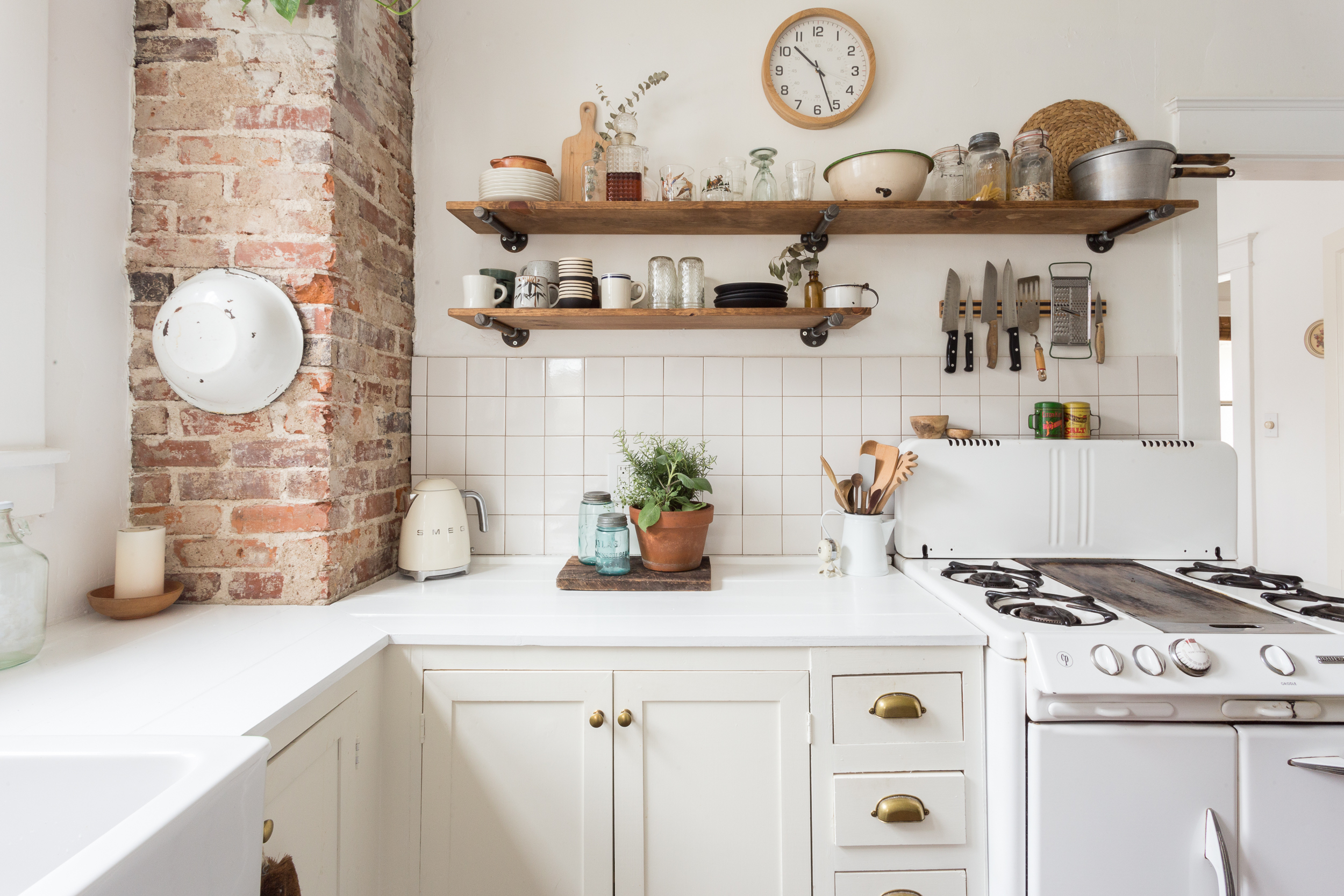
Some people worry that shelves look messy. Others fear dust will gather quickly. These are fair points. The key is balance. Shelves work best when paired with cabinets. You get the look without giving up storage.
Where Open Shelving Works Best
- Above the sink: Easy to grab plates or glasses.
- Near the stove: Handy for spices or cooking oils.
- On a blank wall: A way to fill space without bulky cabinets.
- In small kitchens: Helps the room feel bigger.
Materials and Styles
Wood
Classic and warm. Great for rustic or farmhouse kitchens.
Metal
Strong and sleek. Fits modern or industrial designs.
Glass
Light and airy. Good for a subtle look.
Mixed Materials
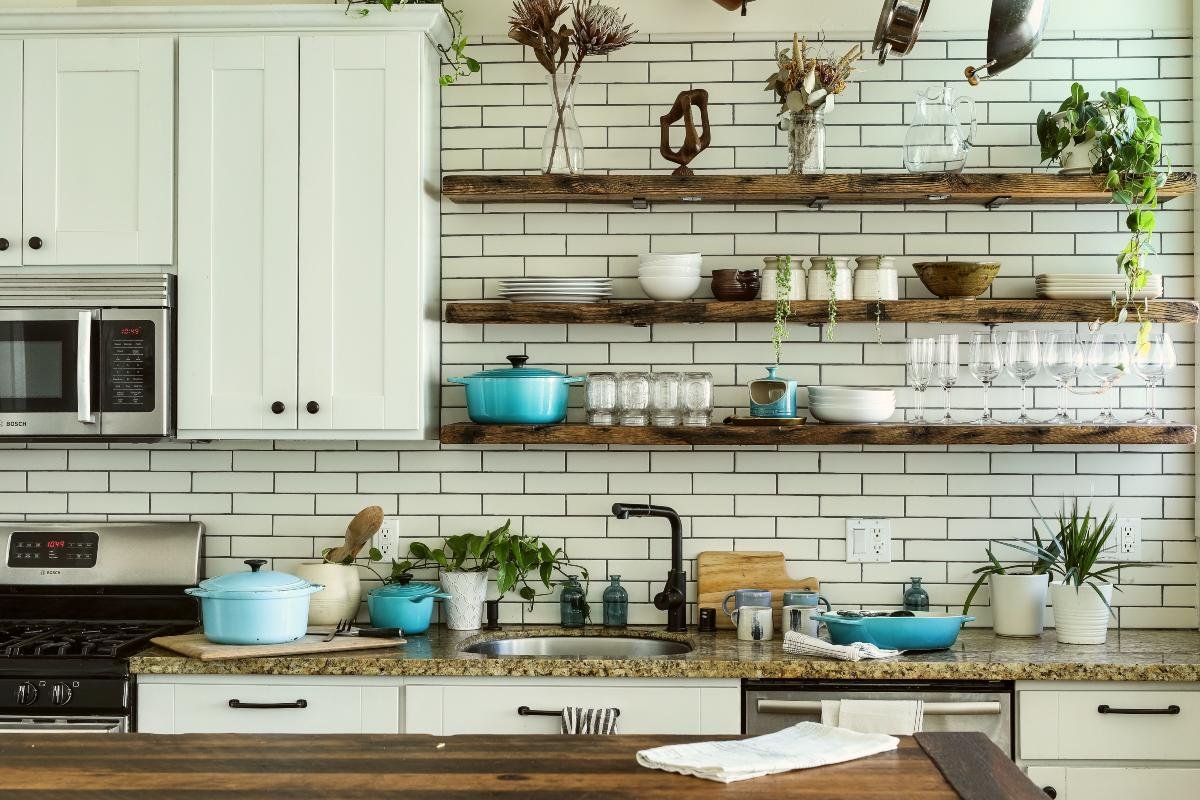
Wood with metal brackets, for example, adds texture.
Tips for Styling Open Shelves
- Keep it simple: Too much clutter ruins the look.
- Use matching dishes: White plates and bowls look clean.
- Mix display and function: Show some pretty items but also keep it practical.
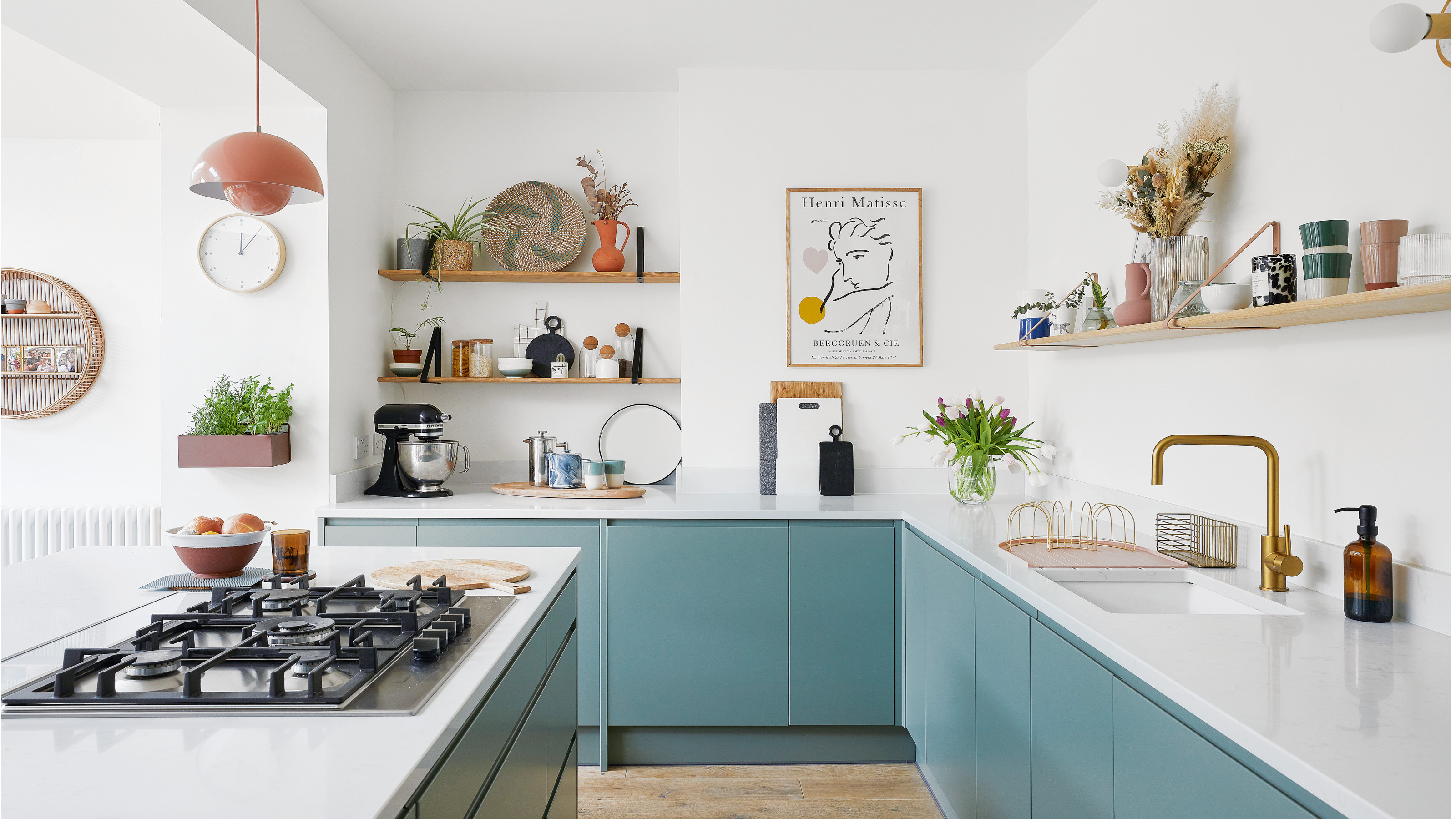
- Add plants: A touch of green makes shelves feel alive.
- Use baskets or bins: Great for hiding small things.
Balancing Open Shelves and Cabinets
Not every wall should be covered with shelves. A good mix is usually best. Keep lower cabinets for bulk storage. Use shelves for items you reach for often or want to display.
Cleaning and Care
Dust will build up. There’s no avoiding it. A quick wipe once a week can keep things looking neat. Dishes used daily usually don’t collect much dust.
Mistakes to Avoid
- Overcrowding: Too many items look messy.
- Heavy items: Shelves can sag under weight.
- Poor spacing: Leave room between shelves for taller items.
- Ignoring lighting: Good lighting makes shelves shine.
Step-by-Step Guide to Adding Open Shelves
- Plan the layout. Decide where shelves fit best.
- Choose materials. Pick wood, metal, or glass.
- Measure carefully. Mark wall studs for strong support.
- Install brackets. Secure them into studs.
- Place shelves. Make sure they sit level.
- Style with care. Add dishes, plants, or decor.
Open Shelving in Different Kitchen Styles
Modern Kitchens
Use sleek wood or metal shelves. Keep colors neutral.
Farmhouse Kitchens
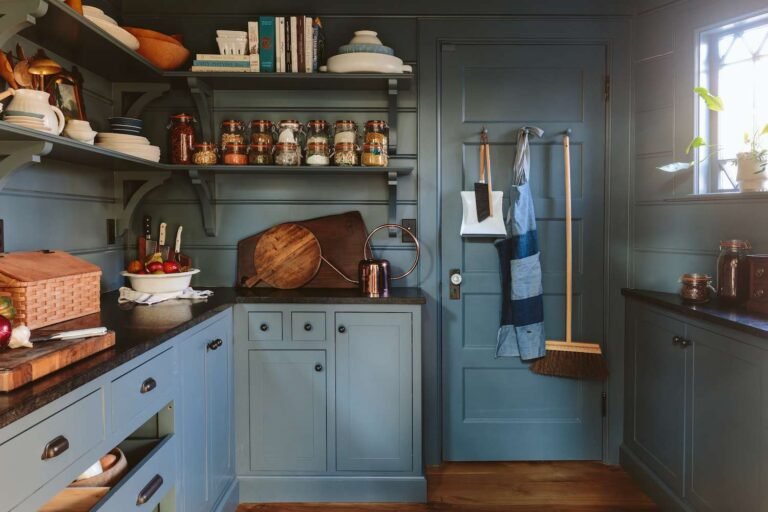
Rustic wood fits well. Add jars, baskets, and simple dishes.
Small Apartments
Floating shelves help save space. Keep them light and minimal.
Traditional Homes
Glass shelves or wood with trim blend in with classic designs.
Budget Considerations
Shelves can be cheap or pricey depending on material. DIY options with wood and simple brackets cost less. Custom shelves cost more but fit the space better.
Open Shelves for Renters
If you rent, you might not want to drill into walls. Try leaning shelves, free-standing units, or small floating shelves that leave minimal marks.
Mixing Decor with Function
Some people treat open shelves like display cases. Others keep them practical. A mix works best. Everyday dishes on the lower shelves. Decorative items higher up.
When Open Shelving May Not Be Right
- If you hate dusting.
- If you like to hide clutter.
- If you have small kids who grab things.
In those cases, you may want to stick with cabinets.
Ideas for Organizing Shelves
- Stack plates by size.
- Use clear jars for pasta, rice, or cereal.
- Arrange mugs by color.
- Place heavier items on lower shelves.
- Rotate decor with the seasons.
Adding Color and Texture
Shelves don’t have to be plain. Paint them to match or contrast with the kitchen. Add textured brackets. Use different finishes for variety.
Lighting for Open Shelving
Lighting can make a big difference. Options include:
- Under-shelf LED strips.
- Small spotlights aimed at shelves.
- Natural light near a window.
Combining with Other Features
Open shelves pair well with:
- Tile backsplashes.
- Hanging rails for utensils.
- Artwork or framed prints.
Table: Pros and Cons of Open Shelving
| Pros | Cons |
|---|---|
| Easy access | Can get dusty |
| Stylish and light | Needs careful styling |
| Lower cost | Not for heavy storage |
| Space for display | Risk of clutter |
Case Example
Imagine a small city kitchen with little light. Replacing upper cabinets with white floating shelves can make the room feel open. Add glass jars, a few plants, and simple dishes. The space looks bigger without losing function.
Long-Term Considerations
Trends come and go. Open shelves may look great now, but consider if you will like them in five years. Think about resale value if you plan to sell your home.
DIY vs Hiring Help
If you are handy, shelves can be a weekend project. If not, a carpenter can help with custom work. Hiring help costs more but ensures strong support and clean finish.
Safety First
Always secure shelves to studs. Use brackets rated for the weight. Never overload shelves. Safety matters more than style.
Open Shelving and Minimalism
People who like minimalism often choose open shelves. The style forces you to keep only what you need. It’s both a design choice and a lifestyle shift.
Cultural and Design Trends
Some designers argue open shelves make kitchens feel homey. Others say they create pressure to keep things picture-perfect. The debate shows how design is not only about looks, but also about daily life.
Final Thoughts
Open shelving can change how a kitchen feels and functions. It is not perfect for everyone, but with planning, it can work well. Start small, maybe with one or two shelves, and see how it feels. Your kitchen should work for you, not just look good in photos.
FAQ
Q: Do shelves replace all cabinets?
A: No, most people mix both.
Q: What is the best wood for shelves?
A: Solid hardwoods like oak or maple are strong choices.
Q: How much weight can shelves hold?
A: It depends on the brackets and wall support. Always check before loading.
Q: Will my dishes get dusty?
A: Some, but daily-use dishes stay clean.
Q: Can I add shelves without remodeling?
A: Yes, you can install floating shelves on a blank wall with little fuss.