Creative Kitchen Ceiling Designs
Introduction
The kitchen is more than just a place to cook. It often becomes the heart of a home. While we spend a lot of time thinking about cabinets, countertops, and flooring, ceilings often get ignored. A well-designed ceiling can transform a kitchen, making it feel larger, brighter, or more inviting. This blog looks at different ideas for kitchen ceiling designs that can inspire any homeowner.
Why Kitchen Ceilings Matter
Ceilings are more than a boundary above your head. They influence how the room feels and functions. A high ceiling can make a small kitchen feel open, while a textured ceiling can add warmth. Lighting fixtures, beams, and patterns on the ceiling can affect mood and focus in the kitchen. Choosing the right ceiling design can improve both style and comfort.

Popular Kitchen Ceiling Styles
1. Tray Ceilings
Tray ceilings have a recessed center that adds depth. They work well in modern and traditional kitchens. These ceilings can make a room feel taller and more spacious. Pair them with hidden lighting to create a soft glow.
2. Coffered Ceilings
Coffered ceilings have a grid of recessed panels. They add structure and interest. Wood beams or painted panels can enhance the effect. This style suits kitchens with classic or rustic themes.
3. Beamed Ceilings
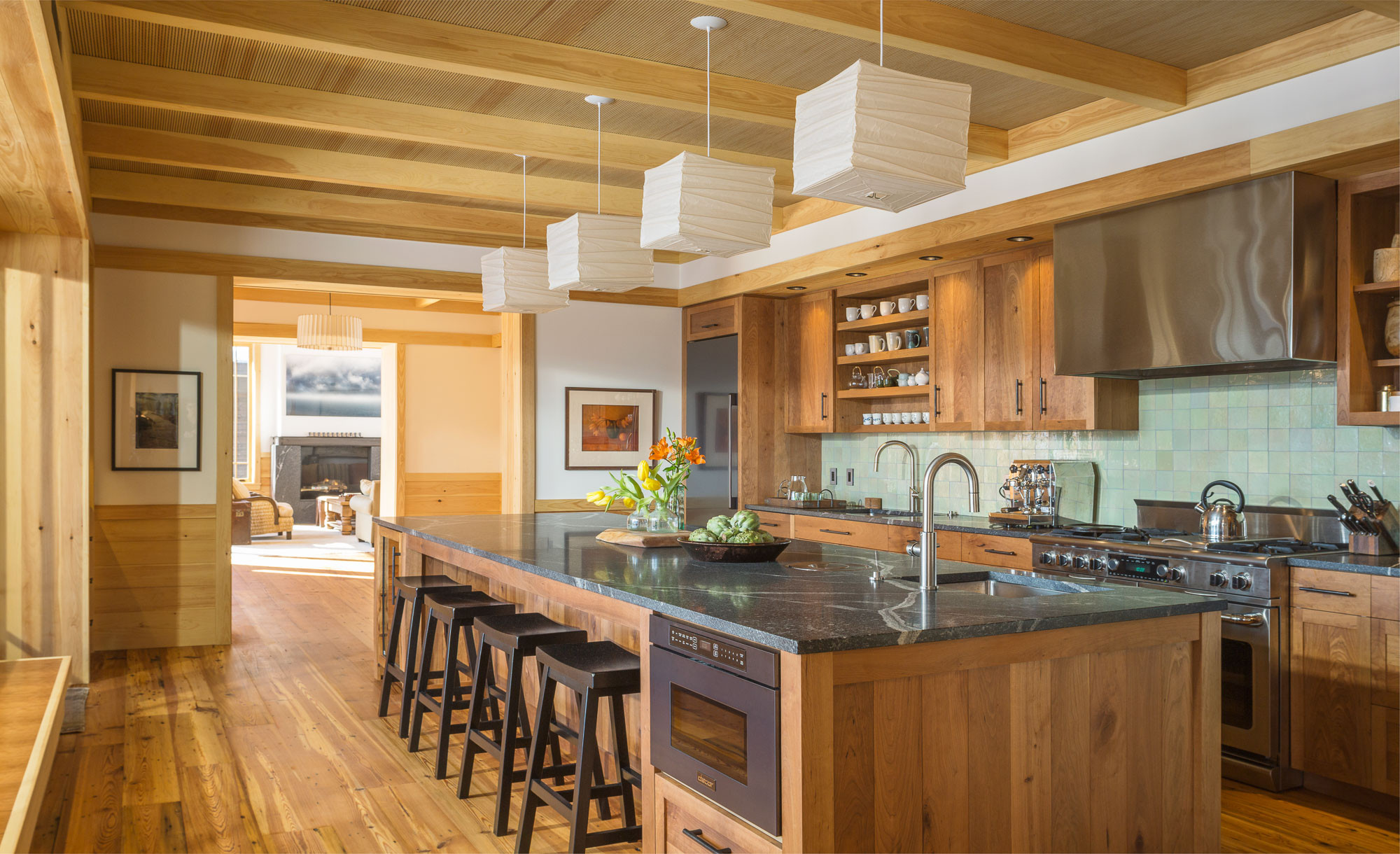
Exposed beams can bring warmth and character. Wood beams work best in traditional or farmhouse kitchens. Painted beams suit modern kitchens. They create a strong visual feature without cluttering the space.
4. Vaulted Ceilings
Vaulted ceilings slope upward, following the roofline. They can make a kitchen feel airy and grand. Skylights can enhance the natural light. Keep in mind that high ceilings may need more heating and cooling.
5. Suspended Ceilings
Suspended ceilings allow for easy installation of lighting and ventilation. They can hide pipes and wiring. Modern suspended panels can include patterns or textures to add style.
Materials for Kitchen Ceilings
Choosing the right material can change the look and function of a ceiling. Here are some options:
- Drywall: Standard and easy to paint.
- Wood: Adds warmth and texture.
- Metal: Modern, reflective, and durable.
- Tin Tiles: Vintage look with decorative patterns.
- Plaster: Smooth, classic finish.
Each material has pros and cons depending on your kitchen’s style, moisture levels, and maintenance needs.
Ceiling Colors and Finishes
The right color can transform a kitchen. White or light colors make the room feel bigger. Dark colors create a cozy, intimate feeling. Matte finishes reduce glare, while glossy finishes reflect light for a bright effect. Combining colors with textures can add dimension and interest.
Lighting and Ceiling Design
Lighting is an essential part of ceiling design. Here are some ways to integrate lighting:
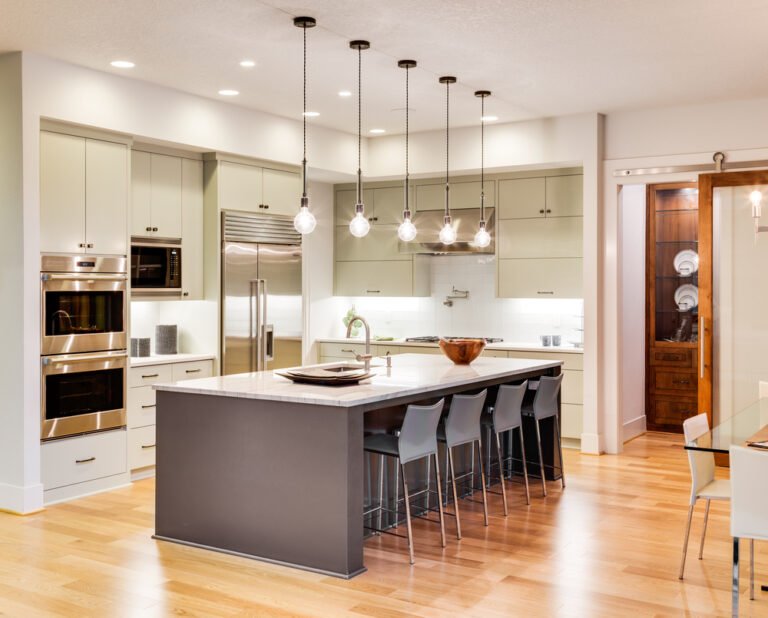
- Pendant Lights: Hang over islands or counters.
- Recessed Lighting: Subtle, blends with the ceiling.
- Chandeliers: Add elegance and a focal point.
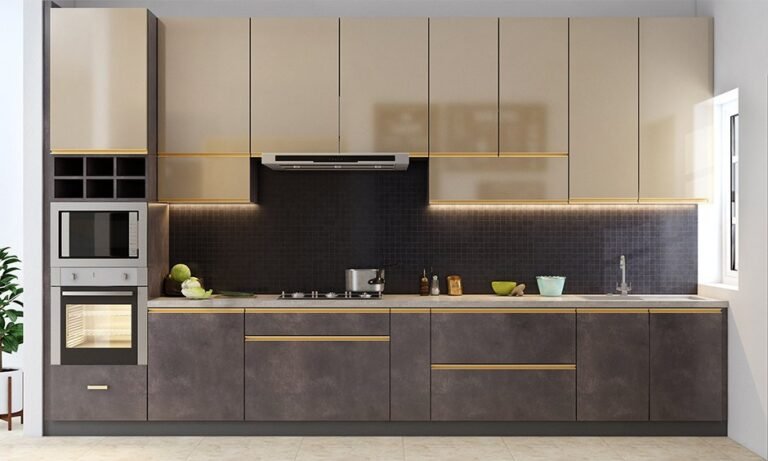
- LED Strips: Highlight tray or coffered ceilings.
Choosing the right lighting improves both style and functionality.
Creative Ideas for Small Kitchens
Small kitchens can benefit from thoughtful ceiling designs. Consider these ideas:
- Mirrored Panels: Reflect light and make the room feel larger.
- Light Wood Beams: Create depth without heaviness.
- Glossy Paint: Reflects light and adds openness.
- Hidden Lighting: Keeps space feeling clean and uncluttered.
Even subtle design choices can change the room dramatically.
Creative Ideas for Large Kitchens
Larger kitchens have more flexibility. Some ideas include:
- Multiple Layered Ceilings: Different heights for different zones.
- Exposed Ductwork or Beams: Adds industrial style.
- Color Blocking: Use paint to define areas.
- Integrated Lighting: Combine chandeliers and recessed lights.
Large kitchens can handle bolder designs without feeling crowded.
Using Patterns and Textures
Patterns can add character to a ceiling. Popular options include:
- Geometric Panels: Modern and clean.
- Wood Planks: Rustic or Scandinavian style.
- Stamped Metal Tiles: Vintage charm.
- Textured Paint: Subtle depth without heavy materials.
Texture and pattern help a ceiling stand out without taking over the space.
Integrating Ceilings with Overall Kitchen Design
A ceiling should match cabinets, countertops, and flooring. For example, a rustic beam ceiling pairs with wooden cabinets. A glossy, painted ceiling works well with modern surfaces. Lighting, colors, and textures should all feel consistent to create harmony.
Budget Considerations
Ceiling designs can vary in cost. Simple paint and molding are affordable. Beamed or coffered ceilings cost more due to materials and labor. Consider long-term value. A well-designed ceiling can increase comfort and even home value.
| Ceiling Type | Approximate Cost | Best For |
|---|---|---|
| Painted Drywall | Low | Any kitchen |
| Beamed Ceiling | Medium-High | Rustic, farmhouse |
| Coffered Ceiling | Medium-High | Traditional, elegant |
| Tin Tiles | Medium | Vintage or eclectic |
| Suspended Ceiling | Medium | Modern, utility-focused |
Common Mistakes to Avoid
Some mistakes can ruin a ceiling design:
- Ignoring scale: A large chandelier in a small kitchen overwhelms the space.
- Overcomplicating: Too many patterns or colors create clutter.
- Poor lighting: Even a beautiful ceiling can feel dull without proper light.
- Skipping maintenance: Wood and metal need care to avoid damage.
Planning ahead helps avoid costly errors.
Maintenance Tips
Different materials need different care:
- Wood: Dust regularly and treat for moisture.
- Metal: Clean with mild detergent.
- Painted Drywall: Wipe with damp cloth for stains.
- Tin Tiles: Polish occasionally to maintain shine.
Routine care keeps your ceiling looking fresh.
Conclusion
Ceiling design can change how a kitchen feels. From simple paint to coffered panels or exposed beams, there are options for every style. Consider size, material, lighting, and color to find a look that fits your kitchen. Small changes can make a big difference. With thoughtful planning, your kitchen ceiling can become a feature, not an afterthought.